The market economy
In the market economy that the production activity that was done by each producer not to be used personally, but to be sold to the market. The economy of the pure market was one organisation kind of economics where not having the government interference to decide the level size of the production in various economic activities. The number and the thing kind that will be produced in the economy fully were determined by situations that were valid in the market, or according to the term that often was used in the analysis of economics, was determined by the mechanism of the market. In the economy of the market, factor-factor the production and the wealth were controlled by private enterprise that was had by the individual or private enterprise's bodies. In this system then really was open the freedom and the competition.
Monday, October 27, 2008

Saturday, October 25, 2008
Subsystem economy
Subsystem economy is an economic organization that every family product by itself for things are needed. They also have to have own capital tools, which used to get things they are needed. The production technology is very simple that cause low productivity, it cause that the production just infest for basic necessary in every family. In almost case, foodstuff is the most important which produced in subsystem economy. In subsystem economy the activity be set up by the habit.
Friday, October 24, 2008
Stocks dive on belief global recession is at hand
By TIM PARADIS
NEW YORK – Wall Street joined world stock markets in a precipitous plunge Friday, with the Dow Jones industrials dropping more than 400 points in early trading and all the major indexes falling more than 4 percent. The growing belief that the world will suffer a punishing economic recession has investors furiously dumping stocks.
The massive decline was caused by increasingly grim news from overseas. In Japan, shares of Sony sank more than 14 percent after it slashed its earnings forecast for the fiscal year. In Germany, Daimler's stock dropped 11.4 percent in morning trading after it reported lower third-quarter earnings and abandoned its 2008 profit and revenue guidance.
Japan's Nikkei stock average fell a staggering 9.60 percent. In Europe, Germany's benchmark DAX index was down 8 percent, France's CAC40 dropped 8.1 percent while Britain's FTSE 100 sank 8.5 percent after the government said its gross domestic product fell 0.5 percent in the third quarter, putting the country on the brink of recession.
The dour outlook convinced investors that the world economy is headed for a long and severe downturn despite a raft of government rescue efforts aimed at pulling the financial system from the brink. It also indicated that the tremors caused by the global credit crisis may have only begun to be felt in their true scope and magnitude.
"There's a lot of panic out there today," said Scott Fullman, director of derivatives investment strategy for WJB Capital Group in New York. "People have been saying that we're in a recession. This is the realization."
Fearing more carnage in world equity markets, big hedge funds and other institutional investors have been pulling out their money en masse in a bid to reduce risk and raise cash — a process known as deleveraging that only intensifies the selling. Meanwhile, individual investors that have seen their holdings decimated in recent weeks have been yanking money out of mutual funds, adding to the downward pressure on markets.
"I think it would be natural to make an assumption that there are some funds in trouble and that we may see some funds shut down," Fullman said.
Investors appeared briefly comforted after a real estate trade group said sales of existing homes rose by the largest amount in more than five years in September. The National Association of Realtors said Friday that sales of existing homes rose by 5.5 percent in September compared to August, the biggest jump since a 5.6 percent increase in July 2003. Prices continued to fall, however. The median sales price has dropped to $191,600, down by 9 percent from a year ago.
But that upbeat data was overwhelmed by the market's increasing gloom and anxiety.
In midmorning trading, the Dow fell 430.81, or 4.96 percent, to 8,260.44 after falling 500 soon after the opening bell.
Broader stock indicators also tumbled. The S&P 500 index fell 43.09, or 4.75 percent, to 865.02, and the Nasdaq composite index fell 66.99, or 4.18 percent, to 1,536.92.
The Russell 2000 index of smaller companies fell 21.72, or 4.43 percent, to 468.20.
On the New York Stock Exchange, 177 issues advanced while 2,693 declined. Volume came to 271.7 million shares.
Investors had been bracing for a rocky start after futures contracts for the Dow and the S&P 500 fell so low they triggered "circuit breakers," which froze selling until the market's 9:30 a.m. EDT open. That slide raised the possibility that circuit breakers intended to prevent panic selling could be triggered during the regular session — something that hasn't happened since 1997.
The thresholds that would trigger a halt in trading are set at a decline of 10 percent, 20 percent and 30 percent in the Dow, based on where that index was at the beginning of the current quarter; that would mean declines of 1,100 points, 2,200 points and 3,300 points, respectively.
If the Dow Jones industrial average falls 1,100 points before 2 p.m., the market will shut down for an hour. If the threshold is breached between 2 p.m. and 2:30 p.m., the halt will last 30 minutes. Trading would stop again if the Dow falls by 2,200 points. If the Dow falls by 3,300 points at any time, trading would be halted for the day.
Still, the final hour of trading is a crucial period as well, with many inventors trying to square away their positions at the last minute. In the past few weeks, some of the market's worst volatility has come in the last 30 minutes of the session.
Gary Townsend, president and CEO of Hill-Townsend Capital Inc., said a halt in trading was a possibility.
"It's a way of smoothing market activity and making it orderly. No one would like to see it," he said.
Elsewhere in Asia on Friday, Hong Kong's Hang Seng index fell 8.3 percent to 12,618. Markets in India, Thailand, Indonesia and the Philippines were also down sharply as investors bailed from emerging markets to cut their exposure to risky assets and meet redemption needs at home.
The deepening gloom over growth expectations is having the added impact of putting small economies and currencies under extreme pressure. Investors are pulling money out of countries in Eastern Europe, Latin America and Asia on fears vulnerable countries will not only be hit hard by the financial crisis but may also default on debt.
In Europe, for example, Hungary, Ukraine and Belarus are all, like Iceland, in talks with the IMF to discuss possible loans.
Meanwhile, demand for U.S. Treasurys jumped as investors sought safe places to put their money. The three-month bill, regarded as the safest asset around, yielded 0.78 percent, down from 0.94 percent late Thursday.
There were signs that credit markets continue to thaw but are doing so more slowly amid growing economic fears. The rate on three-month loans in dollars — known as the London Interbank Offered Rate, or Libor — fell to 3.52 percent from 3.54 percent on Thursday.
The rates have fallen steadily for 10 days as confidence in the banking industry has been helped somewhat by government rescue measures. However, the improvements were smaller Friday on widening concerns about the health of the global economy.
The yield on the benchmark 10-year Treasury note, which moves opposite its price, fell to 3.64 from 3.66 percent late Thursday.
The U.S. dollar, meanwhile, plunged below 93 yen, a 13-year low, as traders reacted to dismal U.S. jobs data that spurred speculation the Federal Reserve might cut interest rates. Meanwhile, gold prices plunged as low as $681 an ounce, the lowest trading level since Jan. 11, 2007.
Light, sweet crude fell $2.96 to $64.88 on the New York Mercantile Exchange. The sell-off, another sign that investors fear a severe recession, came despite OPEC's announcement that it will cut production by 1.5 million barrels a day in a bid to shore up sagging prices.
___
Associated Press writers Stevenson Jacobs, Sara Lepro and Stephen Bernard in New York, Carlos Piovano in London, Alex Kennedy in Singapore, Shino Yuasa in Tokyo and Kelly Olsen in Seoul and contributed to this report.
from: www.news.yahoo.com
NEW YORK – Wall Street joined world stock markets in a precipitous plunge Friday, with the Dow Jones industrials dropping more than 400 points in early trading and all the major indexes falling more than 4 percent. The growing belief that the world will suffer a punishing economic recession has investors furiously dumping stocks.
The massive decline was caused by increasingly grim news from overseas. In Japan, shares of Sony sank more than 14 percent after it slashed its earnings forecast for the fiscal year. In Germany, Daimler's stock dropped 11.4 percent in morning trading after it reported lower third-quarter earnings and abandoned its 2008 profit and revenue guidance.
Japan's Nikkei stock average fell a staggering 9.60 percent. In Europe, Germany's benchmark DAX index was down 8 percent, France's CAC40 dropped 8.1 percent while Britain's FTSE 100 sank 8.5 percent after the government said its gross domestic product fell 0.5 percent in the third quarter, putting the country on the brink of recession.
The dour outlook convinced investors that the world economy is headed for a long and severe downturn despite a raft of government rescue efforts aimed at pulling the financial system from the brink. It also indicated that the tremors caused by the global credit crisis may have only begun to be felt in their true scope and magnitude.
"There's a lot of panic out there today," said Scott Fullman, director of derivatives investment strategy for WJB Capital Group in New York. "People have been saying that we're in a recession. This is the realization."
Fearing more carnage in world equity markets, big hedge funds and other institutional investors have been pulling out their money en masse in a bid to reduce risk and raise cash — a process known as deleveraging that only intensifies the selling. Meanwhile, individual investors that have seen their holdings decimated in recent weeks have been yanking money out of mutual funds, adding to the downward pressure on markets.
"I think it would be natural to make an assumption that there are some funds in trouble and that we may see some funds shut down," Fullman said.
Investors appeared briefly comforted after a real estate trade group said sales of existing homes rose by the largest amount in more than five years in September. The National Association of Realtors said Friday that sales of existing homes rose by 5.5 percent in September compared to August, the biggest jump since a 5.6 percent increase in July 2003. Prices continued to fall, however. The median sales price has dropped to $191,600, down by 9 percent from a year ago.
But that upbeat data was overwhelmed by the market's increasing gloom and anxiety.
In midmorning trading, the Dow fell 430.81, or 4.96 percent, to 8,260.44 after falling 500 soon after the opening bell.
Broader stock indicators also tumbled. The S&P 500 index fell 43.09, or 4.75 percent, to 865.02, and the Nasdaq composite index fell 66.99, or 4.18 percent, to 1,536.92.
The Russell 2000 index of smaller companies fell 21.72, or 4.43 percent, to 468.20.
On the New York Stock Exchange, 177 issues advanced while 2,693 declined. Volume came to 271.7 million shares.
Investors had been bracing for a rocky start after futures contracts for the Dow and the S&P 500 fell so low they triggered "circuit breakers," which froze selling until the market's 9:30 a.m. EDT open. That slide raised the possibility that circuit breakers intended to prevent panic selling could be triggered during the regular session — something that hasn't happened since 1997.
The thresholds that would trigger a halt in trading are set at a decline of 10 percent, 20 percent and 30 percent in the Dow, based on where that index was at the beginning of the current quarter; that would mean declines of 1,100 points, 2,200 points and 3,300 points, respectively.
If the Dow Jones industrial average falls 1,100 points before 2 p.m., the market will shut down for an hour. If the threshold is breached between 2 p.m. and 2:30 p.m., the halt will last 30 minutes. Trading would stop again if the Dow falls by 2,200 points. If the Dow falls by 3,300 points at any time, trading would be halted for the day.
Still, the final hour of trading is a crucial period as well, with many inventors trying to square away their positions at the last minute. In the past few weeks, some of the market's worst volatility has come in the last 30 minutes of the session.
Gary Townsend, president and CEO of Hill-Townsend Capital Inc., said a halt in trading was a possibility.
"It's a way of smoothing market activity and making it orderly. No one would like to see it," he said.
Elsewhere in Asia on Friday, Hong Kong's Hang Seng index fell 8.3 percent to 12,618. Markets in India, Thailand, Indonesia and the Philippines were also down sharply as investors bailed from emerging markets to cut their exposure to risky assets and meet redemption needs at home.
The deepening gloom over growth expectations is having the added impact of putting small economies and currencies under extreme pressure. Investors are pulling money out of countries in Eastern Europe, Latin America and Asia on fears vulnerable countries will not only be hit hard by the financial crisis but may also default on debt.
In Europe, for example, Hungary, Ukraine and Belarus are all, like Iceland, in talks with the IMF to discuss possible loans.
Meanwhile, demand for U.S. Treasurys jumped as investors sought safe places to put their money. The three-month bill, regarded as the safest asset around, yielded 0.78 percent, down from 0.94 percent late Thursday.
There were signs that credit markets continue to thaw but are doing so more slowly amid growing economic fears. The rate on three-month loans in dollars — known as the London Interbank Offered Rate, or Libor — fell to 3.52 percent from 3.54 percent on Thursday.
The rates have fallen steadily for 10 days as confidence in the banking industry has been helped somewhat by government rescue measures. However, the improvements were smaller Friday on widening concerns about the health of the global economy.
The yield on the benchmark 10-year Treasury note, which moves opposite its price, fell to 3.64 from 3.66 percent late Thursday.
The U.S. dollar, meanwhile, plunged below 93 yen, a 13-year low, as traders reacted to dismal U.S. jobs data that spurred speculation the Federal Reserve might cut interest rates. Meanwhile, gold prices plunged as low as $681 an ounce, the lowest trading level since Jan. 11, 2007.
Light, sweet crude fell $2.96 to $64.88 on the New York Mercantile Exchange. The sell-off, another sign that investors fear a severe recession, came despite OPEC's announcement that it will cut production by 1.5 million barrels a day in a bid to shore up sagging prices.
___
Associated Press writers Stevenson Jacobs, Sara Lepro and Stephen Bernard in New York, Carlos Piovano in London, Alex Kennedy in Singapore, Shino Yuasa in Tokyo and Kelly Olsen in Seoul and contributed to this report.
from: www.news.yahoo.com
Tuesday, October 21, 2008
McCain reminds Biden he's been tested in crisis
By GLEN JOHNSON
HARRISBURG, Pa. – Republican John McCain told voters in this key electoral state Tuesday he was personally tested by the same kind of crisis that Democratic vice presidential nominee Joseph Biden warned Barack Obama will almost certainly face if elected president.
McCain recalled being ready to launch a bombing run during the October 1962 Cuban Missile Crisis, which Biden said over the weekend tested a new President John F. Kennedy and was the template for the kind of "generated crisis" the 47-year-old Obama would face within six months of taking office.
"I was on board the USS Enterprise," McCain, a former naval aviator, said in the capital city of Harrisburg. "I sat in the cockpit, on the flight deck of the USS Enterprise, off of Cuba. I had a target. My friends, you know how close we came to a nuclear war."
As the crowd of several thousand began to swell with cheers and applause, he added with dramatic effect: "America will not have a president who needs to be tested. I've been tested, my friends."
Biden told two fundraising audiences in Seattle over the weekend that he expected world figures to test Obama early if he wins the election in two weeks.
"He's gonna need you — not financially to help him — we're gonna need you to use your influence, your influence within the community, to stand with him," Biden said.
Biden predicted Obama would fare well because he's "got steel in his spine." In citing the Cuban Missile Crisis, though, he evoked a historic event in which McCain played a part.
"The Enterprise, sailing at full speed under nuclear power, was the first U.S. carrier to reach waters off Cuba," McCain wrote in his memoir, "Faith of My Fathers." "For about five days, the pilots on the Enterprise believed we were going into action. We had never been in combat before, and despite the global confrontation a strike on Cuba portended, we were prepared and anxious to fly our first mission."
He added: "Pilots and crewmen alike adopted a cool-headed, business-as-usual attitude toward the mission. Inwardly, of course, we were excited as hell, but we kept our composure and aped the standard image of a laconic, reserved, and fearless American at war."
McCain spent all day Tuesday in Democratic-leaning Pennsylvania, worth 21 Electoral College votes, before heading Wednesday into New Hampshire, a formerly reliable GOP state which Obama has made competitive this year. Though it has only four of the 270 electoral votes needed to win the presidency, New Hampshire could swing the election under some voting models which predict a very close Electoral College split.
The 72-year-old McCain regularly questions whether Obama — a first-term senator — has the experience to be president. He also questions whether the Illinois Democrat has the character to stand up to his own party and to stick with his core philosophical views.
In a region experiencing World Series fever, McCain underscored his argument by noting Obama had expressed support for both teams playing in the upcoming baseball championship.
Standing just miles north of Philadelphia, whose Phillies will represent the National League starting Wednesday against the American League champion Tampa Bay Rays, McCain noted Obama has identified himself with both teams while campaigning in their two politically important home states.
Obama said over the weekend in Philadelphia that while he was a Chicago fan, "Since the White Sox are out of it, I'll root for the Phillies now." On Monday in Tampa, Obama was introduced by a Rays pitcher and said, "I've said from the beginning that I am a unity candidate, bringing people together. So when you see a White Sox Fan showing love to the Rays — and the Rays showing some love back — you know we are on to something right here."
McCain told employees at TCI Millwork Inc. in Bensalem: "Now, I'm not dumb enough to get mixed up in a World Series between swing states. But I think I may have detected a little pattern with Sen. Obama. It's pretty simple really. When he's campaigning in Philadelphia, he roots for the Phillies, and when he's campaigning in Tampa Bay, he `shows love' to the Rays."
As boos echoed through a cavernous warehouse, he added:"It's kind of like the way he campaigns on tax cuts, but then votes for tax increases after he's elected."
McCain ended his day with a rally at Robert Morris University in Moon Township, just outside Pittsburgh. He tried to criticize Obama for saying in April that working class Pennsylvanians "cling" to guns and religion when their economic fears rise and Rep. John Murtha, D-Pa., for saying last week that some of his Western Pennsylvania constituents are racist. But McCain drew mostly silence as he fumbled the remarks several times before getting his point right.
"Sen. Obama's supporters have been saying some pretty nasty things about Western Pennsylvania lately. And you know I couldn't agree with them more. I couldn't disagree with you. I couldn't agree with you more than the fact that Western Pennsylvania is the most patriotic, most god-loving, most patriotic part of America. This is a great part of the country. My friends, I could not disagree with those critics more," McCain said.
from: http://news.yahoo.com
HARRISBURG, Pa. – Republican John McCain told voters in this key electoral state Tuesday he was personally tested by the same kind of crisis that Democratic vice presidential nominee Joseph Biden warned Barack Obama will almost certainly face if elected president.
McCain recalled being ready to launch a bombing run during the October 1962 Cuban Missile Crisis, which Biden said over the weekend tested a new President John F. Kennedy and was the template for the kind of "generated crisis" the 47-year-old Obama would face within six months of taking office.
"I was on board the USS Enterprise," McCain, a former naval aviator, said in the capital city of Harrisburg. "I sat in the cockpit, on the flight deck of the USS Enterprise, off of Cuba. I had a target. My friends, you know how close we came to a nuclear war."
As the crowd of several thousand began to swell with cheers and applause, he added with dramatic effect: "America will not have a president who needs to be tested. I've been tested, my friends."
Biden told two fundraising audiences in Seattle over the weekend that he expected world figures to test Obama early if he wins the election in two weeks.
"He's gonna need you — not financially to help him — we're gonna need you to use your influence, your influence within the community, to stand with him," Biden said.
Biden predicted Obama would fare well because he's "got steel in his spine." In citing the Cuban Missile Crisis, though, he evoked a historic event in which McCain played a part.
"The Enterprise, sailing at full speed under nuclear power, was the first U.S. carrier to reach waters off Cuba," McCain wrote in his memoir, "Faith of My Fathers." "For about five days, the pilots on the Enterprise believed we were going into action. We had never been in combat before, and despite the global confrontation a strike on Cuba portended, we were prepared and anxious to fly our first mission."
He added: "Pilots and crewmen alike adopted a cool-headed, business-as-usual attitude toward the mission. Inwardly, of course, we were excited as hell, but we kept our composure and aped the standard image of a laconic, reserved, and fearless American at war."
McCain spent all day Tuesday in Democratic-leaning Pennsylvania, worth 21 Electoral College votes, before heading Wednesday into New Hampshire, a formerly reliable GOP state which Obama has made competitive this year. Though it has only four of the 270 electoral votes needed to win the presidency, New Hampshire could swing the election under some voting models which predict a very close Electoral College split.
The 72-year-old McCain regularly questions whether Obama — a first-term senator — has the experience to be president. He also questions whether the Illinois Democrat has the character to stand up to his own party and to stick with his core philosophical views.
In a region experiencing World Series fever, McCain underscored his argument by noting Obama had expressed support for both teams playing in the upcoming baseball championship.
Standing just miles north of Philadelphia, whose Phillies will represent the National League starting Wednesday against the American League champion Tampa Bay Rays, McCain noted Obama has identified himself with both teams while campaigning in their two politically important home states.
Obama said over the weekend in Philadelphia that while he was a Chicago fan, "Since the White Sox are out of it, I'll root for the Phillies now." On Monday in Tampa, Obama was introduced by a Rays pitcher and said, "I've said from the beginning that I am a unity candidate, bringing people together. So when you see a White Sox Fan showing love to the Rays — and the Rays showing some love back — you know we are on to something right here."
McCain told employees at TCI Millwork Inc. in Bensalem: "Now, I'm not dumb enough to get mixed up in a World Series between swing states. But I think I may have detected a little pattern with Sen. Obama. It's pretty simple really. When he's campaigning in Philadelphia, he roots for the Phillies, and when he's campaigning in Tampa Bay, he `shows love' to the Rays."
As boos echoed through a cavernous warehouse, he added:"It's kind of like the way he campaigns on tax cuts, but then votes for tax increases after he's elected."
McCain ended his day with a rally at Robert Morris University in Moon Township, just outside Pittsburgh. He tried to criticize Obama for saying in April that working class Pennsylvanians "cling" to guns and religion when their economic fears rise and Rep. John Murtha, D-Pa., for saying last week that some of his Western Pennsylvania constituents are racist. But McCain drew mostly silence as he fumbled the remarks several times before getting his point right.
"Sen. Obama's supporters have been saying some pretty nasty things about Western Pennsylvania lately. And you know I couldn't agree with them more. I couldn't disagree with you. I couldn't agree with you more than the fact that Western Pennsylvania is the most patriotic, most god-loving, most patriotic part of America. This is a great part of the country. My friends, I could not disagree with those critics more," McCain said.
from: http://news.yahoo.com
Sunday, October 19, 2008
Kinds of economy problems
Kinds of economy problems
Every economy action has main problem like, what things which have to product; how the technic and elaboration of production factors which have to use to produck that things; how the people income to be distributted between production factors and how the distribution can rise the people income up; do the production factors rise the high efficiency; why always there are inflation problems and how to get the solution for it; and how must the effort doing from time to time to get efficiency in using production factors.
Friday, October 17, 2008
How Will the Economic Crisis Change America?
How Will the Economic Crisis Change America?
By R.M. SchneidermanThe new economic crisis is reshaping the American financial landscape. But what will the long-term cultural and political consequences be?
John Willman, a Financial Times editor, writes today that he expects the financial crisis to lead to anti-banker sentiment, “a surge of recruits from the best universities into professions such as teaching, social work and public administration,” and less support for public services, among other things.
Meanwhile, on tnr.com, Alan Wolfe, a professor of political science at Boston College, argues that we’re unlikely to see a replay of the aftermath of the Great Depression, during which “[a]n entire generation of Americans…voted Democratic, chose Social Security over economic liberty, believed in government, and admired political leadership.”
Instead, he thinks that “the partisan polarization that has characterized American politics over the past two decades will continue” and that American democracy is unlikely to fully recover from it.
I’m not sure what will ensue. But one thing is for sure: there will almost certainly be some ramifications to our economic turmoil. As Richard Cohen, a columnist for The Washington Post, wrote in a recent piece: “An economic crisis is like war. It’s impossible to contain. It affects everything it touches.”
Your thoughts?
From: http://economix.blogs.nytimes.com
comment
As a 66 year old senior citizen I have seen many a financial downturn in America, but this most recent one is the most troubling. Regardless of how it started, the emphasis should be on how to fix it. I would like to share my thoughts on a few ways to do just that.
FIRST, the U.S. treasury should create a central credit clearing house that would approve all future personal and business loan applications submitted to them from banks and lending institutions. These would be loans for automobiles, homes, furniture, education, etc. for folks who need to borrow in order to buy these items. There would also be applications for business loans to increase inventories, hire new employees, expand business, etc.
When those applications are approved they would be returned to the banks and lending companies with a loan guarantee document that would backup the loans against defaults. This would promote confidence in the lending of money again because there would be no worry that the loan(s) would not be repaid. Business would again flourish; people would once again be buying cars, clothing, appliances. etc. The companies that sell these goods would make money again, hire more people who would be making money to spend buying other goods, paying their bills, paying taxes on their incomes and sales taxes too. Everyone would benefit from this process. Additionally, more government jobs would open up in the new government credit clearing house. It’s a win-win situation.
The SECOND suggestion would have to do with Real Estate Investment Trusts and other securities and funds that contain "packaged" mortgages. This practice should and must be stopped until these mortgages are first cleared through the aforementioned U.S. Credit Clearing House. If investment firms had this process in place before everything recently hit the fan with "subprime" mortgages, we would not be in the situation we are now in.
When I purchased my first house back in 1967 the bank from which I received and approved my first mortgage also serviced my mortgage along with all the other mortgages they sold. There were no REITs and no selling of mortgages as securities or for that matter, no "subprime" mortgages. If you didn’t qualify for a mortgage, you didn’t get one, PERIOD. Old-fashioned common sense business practices. Perhaps our current business transactions should take a lesson from their counterparts of a different generation. I hope that these suggestions are given serious consideration for I truly believe that if implemented correctly they will work.
From: http://www.economyincrisis.org
Wall Street Elites: Reverse Brain Drain
Wall Street Elites: Reverse Brain Drain
Published 10/17/08 Craig Harrington - Print ArticleE-mail - editor@economyincisis.org
It is no surprise that the U.S. Job market has dried up significantly in recent years. It is not even surprising to hear that Wall Street – the epicenter of America's elite – has stumbled mightily, hemorrhaging thousands of jobs as companies like AIG, Merrill Lynch, Bear Stearns and Lehman Brothers tried to stay afloat. But it may be surprising to consider where those new members of the workforce are now looking for stable income: overseas.
Foreign markets are suffering from the economic recession as well, but not to the degree we have seen in the United States. As a result, many qualified American workers are looking abroad for stability in these uncertain times, according to The Wall Street Journal.
American financial professionals seem to be most interested in coastal cities in China, the Persian Gulf and Europe. Developing economies in India, Russia and Brazil are also considered attractive.
It might be expected that a recent college graduate or MBA recipient would be willing to move overseas to make a name for themselves, but much of the interest is coming from professionals already working in the financial industry. The idea of looking into an “emerging market” for job security is symptomatic of just how bad the situation in New York and other financial hubs has gotten. An emerging market is typically unstable and prone to massive fluctuation. In markets like India and China the boom has been pronounced and steady. In Brazil and Russia, long-term viability has yet to be proven. The fact that each of these is considered equally enticing for would-be applicants shows how far down the rabbit hole the American finance industry has fallen.
Not only are layoffs increasing as financial firms implode, but hiring rates are also dropping. An investment firm isn't laying off a high-salary worker and replacing them with cheaper, younger labor. The firm is laying off a high-salary worker and simply taking a hit to its productivity, hoping that the payroll savings will offset the revenue losses.
Hiring at many U.S. firms is stagnant, the same cannot be said of firms in Dubai and Shanghai, where the talent pool continues to get bigger and better. Robert Olman, president of Alpha Search Advisory Partners, is an expert in the hiring processes of hedge funds and investment banks. He believes that the current malaise will continue well into 2009.
The United States cannot afford to lose talented professionals – and in many cases, their families – in yet another key area. The U.S. has already been gutted by NAFTA and the WTO which make outsourcing to cheap labor markets in Mexico, India, China and elsewhere almost unavoidable. The only bastion left in the U.S. economy was our finance and banking sector, but it has come under fire from upstart foreign competition and is now being poached of some of its best talent. The government hopes to convince you to spend this country out of our recession – that's what the Economic Stimulus Act was intended for – but we simply cannot do that without income. Without viable job options there can be no income, and thus no recovery.
from: http://www.economyincrisis.org
Tuesday, October 14, 2008
A light at the end of the tunnel?
Concerted action is taken around the world to rescue the financial system
THE dithering has ended. After a week in which the financial system almost ground to a halt, governments of the industrialised world seem at last to have found the right tools to get credit markets moving again. At the weekend and early on Monday October 13th officials in Europe, America and Asia announced unprecedented and comprehensive plans to prop up failing banks, guarantee their loans and flood the world with cash by providing unlimited dollar funds through central banks. At first blush—and in contrast to previous failures after half-hearted efforts—the new plans seem to be working. Stockmarkets rose around the world on Monday, although the real sign that the situation is improving will come in the credit markets this week.
All the actions are aimed at dealing with the three related problems that have blocked credit markets and the banking system. These are that banks have been unable to raise enough money in the frozen short-term money markets; that banks are unable to take out loans for three-to-five years to make up the shortfall between deposits and lending, because markets for longer-term borrowing are also shut; and, last, that they are struggling to win the trust of lenders because they do not have enough capital as a cushion against losses.
To provide liquidity the Federal Reserve, acting with the European Central Bank (ECB), the Bank of England and the Swiss central bank, will provide banks with as many dollars as banks demand in a bid to reduce borrowing costs, which soared to record levels last week. The move follows a similar promise by the ECB to flood the market with euros. The provision of unlimited dollars to the Swiss central bank is especially important, as the country has a banking sector with foreign-currency liabilities that tower over its domestic economy.
Steps are also being taken to address problems of bank capital and longer-term borrowing. In Europe, the 15 countries that share the euro have now promised to guarantee new bank debt and to inject capital into ailing banks. The European plan draws on the main elements of a British programme, announced last week, that that will immediately see some £37 billion ($63 billion) injected into three of the country’s biggest banks. This will rebuild their capital cushions, or so-called Tier-1 capital ratios, to above 9%. Almost all of the extra capital is likely come from the government. Additional money will also be needed by other banks such as Barclays, although they are hoping to raise it themselves without help from the government.
The bank most in need of extra capital is Royal Bank of Scotland, which rashly bought ABN Amro at the top of the market last year. It needs some £20 billion and is unlikely to raise much of this in the market. The government, if it provides all that is needed, may end up owning over half the bank. HBOS and Lloyds TSB, two banks that are about to merge, need another £17 billion between them.
The British government is demanding a pound of flesh in return. Banks that take capital from the government have to agree to limit executive pay. They also face a potential government veto on the payment of cash dividends to shareholders and must promise to help struggling homeowners stay in their homes. More worrying, however, are signs that the government may also interfere in lending decisions by banks in the programme. The banks have to promise to make as much available in loans to homeowners and small businesses for the next three years as they did in 2007 at the height of the credit bubble.
Details are yet to emerge about how countries in the eurozone intend to guarantee bank loans or to inject capital into their banks, although early indications suggest that the scale of their action will be similar to that taken in Britain. The German bail-out, for instance, may be worth about €400 billion ($540 billion).
Despite all this activity, two weaknesses remain. The first is that the ECB is unable to buy commercial paper, the loans that companies issue, which may limit its ability to bypass frozen credit markets to get money directly to struggling companies, as it has been able to do with banks.
A second disappointment was the G7 meeting in Washington, DC. Its officials went into their gathering knowing that ad hoc responses of the prior week had hurt confidence and that they needed to deliver a co-ordinated message detailing what concrete measures would be taken. They promised to “support systemically important financial institutions and prevent their failure”, apparently indicating that no large banks would be allowed fail.
But to many market participants the statement lacked the necessary specificity to restore confidence and left open the question of whether smaller countries that are not part of the G7 or European Union would be included. Nor was it clear how countries that break ranks would be handled. Some governments still face a tough political sales job at home where voters are as upset as Americans about being asked to bail out wealthy bankers.
From: http://www.economist.com
Beyond crisis management
Bold ideas for solving America’s financial mess
EVERY financial crisis involves a tug of war between the tacticians and the strategists. The tacticians dash from skirmish to skirmish trying to control a crisis, deciding in each case whether taxpayers should bail out a distressed bank, firm or country. The strategists call for a more comprehensive approach to resolving the mess—often involving new government bodies to recapitalise banks or take over troubled assets.
The present crisis in America conforms to this pattern. So far, the government’s response has been ad hoc and focused on crisis containment. The tacticians at the Federal Reserve and the Treasury have put plenty of taxpayers’ money on the line—whether through the huge expansion in the central bank’s liquidity facilities, the loan to Bear Stearns in March, or the government takeover of Fannie Mae and Freddie Mac, the mortgage giants, and, now, of AIG, a huge insurer. But they have focused on staving off catastrophe one bail-out at a time.
Now the strategists are pushing back. From across the political spectrum people are arguing that it is time for America to shift to a more systematic approach. In the past week Barney Frank, the leading Democrat on financial matters in the House of Representatives, Paul Volcker, a former chairman of the Fed, as well as writers of the editorial pages of the Wall Street Journal, have suggested that Congress may need to create a new agency to deal with the mess. All have pointed to the Resolution Trust Corporation (RTC), a government body set up in 1989 to deal with the fallout of the savings and loan (S&L) bankruptcies.
Americans focus on the RTC because it is the country’s most recent example of a comprehensive government plan to deal with a financial crisis. Between 1980 and 1994 almost 1,300 specialised mortgage lenders, known as thrifts, failed. Their combined assets amounted to more than $600 billion. By 1986 these failures had bankrupted the Federal Savings and Loan Insurance Corporation, the federal insurer for the thrift industry. At first the government tried to muddle through by trying to recapitalise the insurer. But the S&L mess escalated. In 1989 Congress created the RTC, an entirely new organisation, to dispose of the failed thrifts’ assets in a way that minimised downward pressure on financial and property markets.
The RTC is not a perfect parallel for today’s needs. It was set up—years after the S&L crisis began—to deal with the aftermath of widespread bank failures. Those who advocate comprehensive action today want to minimise the mess, not just clean up afterwards. Their proposals vary, but many who cite the RTC envisage an institution that buys troubled mortgage-backed securities (not only from failing institutions), putting a floor under their price. Some propose that the putative new agency should manage and write down the underlying mortgages, in effect combining the functions of the RTC with a Depression-era institution, called the Home Owners’ Loan Corporation, which bought and restructured defaulting mortgages. Details are in short supply, but intellectual momentum is building for a broader solution.
Not a moment too soon, suggest the results of a new study by Luc Laeven and Fabian Valencia, two IMF economists.* They examined all systemically important banking crises between 1970 and 2007, creating a database on how much financial crises cost and how they are resolved. The evidence is clear. Tactical crisis containment is expensive and frequently inadequate. In most financial meltdowns a comprehensive solution was required, and the sooner it was provided the better.
The study looks at 42 crises in all, spanning 37 countries. Like America today, most governments began with ad hoc crisis management. In 74% of cases, for instance, governments pumped emergency loans into failing banks or guaranteed their liabilities. An equally common tactic has been regulatory forbearance. Governments allowed banks to hold less capital than was normally required or softened their rules in other ways. These tactical responses, however, often did not work and ended up increasing the overall bill from a crisis. “All too often”, the economists conclude, “central banks privilege stability over cost in the heat of the containment phase.”
No such thing as a free crunch
Sooner or later most governments realise the need for a comprehensive solution to the crisis, involving public funds. This can take different forms, from bank recapitalisation to forgiveness of all the underlying debts. In three-quarters of the cases, governments shored up bank capital by, for instance, injecting preferred stock. About 60% of the time, governments set up institutions to manage distressed assets.
The evidence from these attempts is sobering for proponents of an RTC II. Some institutions worked well. In the early 1990s, for instance, Sweden successfully set up an asset-management company to take over and sell the bad loans from its biggest banks. But, in general, the paper argues, such government-owned asset-management firms are ineffective—often because politicians try to push them around.
On average, the study finds that government attempts to stanch systemic banking crises over the past three decades have cost 16% of GDP. That average hides enormous variation, much of which depends on how crises were handled. America’s mess, even if it has already led to the demise of famous Wall Street firms, is far from finished. That is why the international lessons are worth taking seriously. Resolving a financial mess is cheaper, quicker and less painful if governments take a rounded approach. For the moment, the bail-out tacticians are in overdrive. But the strategists’ moment is approaching.
from: http://www.economist.comG7 Economic Meeting
Finance ministers of G7 nations are meeting with President Bush this weekend in Washington, D.C. They're trying to come up with a strong and coordinated response to the economic crisis. What difference can and should the meeting make? We check in with Chris Farrell, chief economics correspondent for American Public Media.
october 11, 2008.
from: http://weekendamerica.publicradio.org
october 11, 2008.
from: http://weekendamerica.publicradio.org
Saturday, October 11, 2008
G-7: 'Urgent action' needed
NEW YORK (CNNMoney.com) -- Finance ministers from the world's top economies pledged Friday to work together to stabilize global financial markets, but did not provide concrete plans to address the credit chaos sweeping the world.
"The G-7 agrees today that the current situation calls for urgent and exceptional action," the leaders, who are meeting in Washington D.C., said in a statement. "We commit to continue working together to stabilize financial markets and restore the flow of credit, to support global economic growth."
The plan of action includes:
* Take decisive action and use all available tools to prevent "important" institutions from failing.
* Take steps to unfreeze credit and money markets and ensure that banks and other institutions have broad access to liquidity and funding.
* Ensure that banks and other major financial intermediaries can raise enough capital from public and private sources to re-establish confidence and kick start lending to individuals and businesses.
* Ensure that each country's deposit insurance programs are strong and consistent to assure depositors their money is safe.
* Take action to restart the secondary markets for mortgages and other securitized assets.
U.S. Treasury Secretary Henry Paulson said the group "finalized an aggressive action plan to address the turmoil in global markets and the stresses on our financial institutions."
The statement, however, didn't lay out any specific actions the G-7 will take, and that's what financial institutions and investors are waiting to see, experts said. The finance ministers must announce concrete steps by the end of the weekend if they want to soothe the roiling markets.
"The time for such statements is long past," said Eswar Prasad, economics professor at Cornell University and senior fellow at the Brookings Institution. "We need to see real action. But the markets are getting a little concerned that there aren't many arrows left in central banks' quivers at this stage."
The Dow Jones industrial average fell over 1,874 points, or 18%, in its worst weekly decline ever on both a point and percentage basis. Wall Street lost roughly $2.4 trillion in market value during the week, according to losses in the Dow Jones Wilshire 5000, the broadest measure of the market.
Markets worldwide fared no better, with every major exchange losing ground Friday.
But even decisive action by the G-7 ministers won't calm the markets overnight, Paulson said.
"We'll have some volatility for a while," he said. "This is about confidence...we need to restore confidence."
What needs to be done
A government guarantee that the banks won't fail is just about the only thing that might restore trust in the financial system, experts said. This can be done in a variety of ways, including injecting capital into the institutions or guaranteeing interbank lending, an idea floated by British officials earlier this week.
"What they should be saying is that the G-7 governments will put the full faith and credit of their nations behind the financial systems in order to remove the fear of financial institutions loaning to one another," said Lakshman Achuthan, managing director, Economic Cycle Research Institute.
The ministers need to announce a plan before the Asian markets reopen Monday lest more damage occurs, said Achuthan. Already, the delay has turned a mild recession in the United States into a more severe one.
Global governments already taking steps
Around the world, central banks this week have tried to contain the deepening global financial crisis. On Wednesday, a group of banks including the Federal Reserve coordinated interest rate cuts, hoping to lower banks' cost of borrowing and soothe nervous investors.
The Fed lowered its benchmark interest rate by a half-point to 1.5%. The European Central Bank, which had kept rates unchanged as the Fed engaged in a string of rate cuts over the last year, cut its rate by a half-point to 3.75% - its first cut in five years. The Bank of England also cut its rate by a half-point to 4.5%. The Swiss, Canadian and Swedish central banks also made cuts.
Some countries have also had to rescue their troubled institutions. The Dutch and Belgian governments took over Fortis, before selling pieces of it to BNP Paribas. The British are nationalizing mortgage lender Bradford & Bingley.
And some nations, including Ireland, France and Germany, have said that all bank deposits will be insured by their governments for the time being.
Meanwhile, the United States and United Kingdom are developing plans to inject capital into banks, which would entail acquiring stakes in the institutions.
"As we develop plans to purchase equity ... we are working to develop a standardized program that is open to a broad array of financial institutions," Paulson said.
Coordinated effort needed
Some experts say that a coordinated effort is needed to restore confidence and stability to markets.
"I hope the G-7 meeting will point toward coordinated actions to show that authorities are getting ahead of the curve," said Robert Zoellick, president of the World Bank, on Thursday. "Countries will take different actions, customized to their circumstances, yet the actions need to target the same basic problems."
That problem is a lack of confidence between financial institutions worried about their ability to safely trade and loan money to one another. These jitters prompted a near cut-off in credit needed to fund the day-to-day operations of businesses around the world.
"The G-7 countries can work through this crisis by dealing with bad assets, recapitalizing banks, and providing much needed liquidity," said Zoellick. "They need to work together to fix the financial, regulatory, and supervisory system that failed."
Each country, of course, will have to take steps to address its particular problems.
"I think that some people in the press and some in the markets are naive if they think that different countries with different financial systems - and different political systems, different laws - are going to come up with precisely the same policy to deal with the issues," Paulson said.
from: http://money.cnn.com
"The G-7 agrees today that the current situation calls for urgent and exceptional action," the leaders, who are meeting in Washington D.C., said in a statement. "We commit to continue working together to stabilize financial markets and restore the flow of credit, to support global economic growth."
The plan of action includes:
* Take decisive action and use all available tools to prevent "important" institutions from failing.
* Take steps to unfreeze credit and money markets and ensure that banks and other institutions have broad access to liquidity and funding.
* Ensure that banks and other major financial intermediaries can raise enough capital from public and private sources to re-establish confidence and kick start lending to individuals and businesses.
* Ensure that each country's deposit insurance programs are strong and consistent to assure depositors their money is safe.
* Take action to restart the secondary markets for mortgages and other securitized assets.
U.S. Treasury Secretary Henry Paulson said the group "finalized an aggressive action plan to address the turmoil in global markets and the stresses on our financial institutions."
The statement, however, didn't lay out any specific actions the G-7 will take, and that's what financial institutions and investors are waiting to see, experts said. The finance ministers must announce concrete steps by the end of the weekend if they want to soothe the roiling markets.
"The time for such statements is long past," said Eswar Prasad, economics professor at Cornell University and senior fellow at the Brookings Institution. "We need to see real action. But the markets are getting a little concerned that there aren't many arrows left in central banks' quivers at this stage."
The Dow Jones industrial average fell over 1,874 points, or 18%, in its worst weekly decline ever on both a point and percentage basis. Wall Street lost roughly $2.4 trillion in market value during the week, according to losses in the Dow Jones Wilshire 5000, the broadest measure of the market.
Markets worldwide fared no better, with every major exchange losing ground Friday.
But even decisive action by the G-7 ministers won't calm the markets overnight, Paulson said.
"We'll have some volatility for a while," he said. "This is about confidence...we need to restore confidence."
What needs to be done
A government guarantee that the banks won't fail is just about the only thing that might restore trust in the financial system, experts said. This can be done in a variety of ways, including injecting capital into the institutions or guaranteeing interbank lending, an idea floated by British officials earlier this week.
"What they should be saying is that the G-7 governments will put the full faith and credit of their nations behind the financial systems in order to remove the fear of financial institutions loaning to one another," said Lakshman Achuthan, managing director, Economic Cycle Research Institute.
The ministers need to announce a plan before the Asian markets reopen Monday lest more damage occurs, said Achuthan. Already, the delay has turned a mild recession in the United States into a more severe one.
Global governments already taking steps
Around the world, central banks this week have tried to contain the deepening global financial crisis. On Wednesday, a group of banks including the Federal Reserve coordinated interest rate cuts, hoping to lower banks' cost of borrowing and soothe nervous investors.
The Fed lowered its benchmark interest rate by a half-point to 1.5%. The European Central Bank, which had kept rates unchanged as the Fed engaged in a string of rate cuts over the last year, cut its rate by a half-point to 3.75% - its first cut in five years. The Bank of England also cut its rate by a half-point to 4.5%. The Swiss, Canadian and Swedish central banks also made cuts.
Some countries have also had to rescue their troubled institutions. The Dutch and Belgian governments took over Fortis, before selling pieces of it to BNP Paribas. The British are nationalizing mortgage lender Bradford & Bingley.
And some nations, including Ireland, France and Germany, have said that all bank deposits will be insured by their governments for the time being.
Meanwhile, the United States and United Kingdom are developing plans to inject capital into banks, which would entail acquiring stakes in the institutions.
"As we develop plans to purchase equity ... we are working to develop a standardized program that is open to a broad array of financial institutions," Paulson said.
Coordinated effort needed
Some experts say that a coordinated effort is needed to restore confidence and stability to markets.
"I hope the G-7 meeting will point toward coordinated actions to show that authorities are getting ahead of the curve," said Robert Zoellick, president of the World Bank, on Thursday. "Countries will take different actions, customized to their circumstances, yet the actions need to target the same basic problems."
That problem is a lack of confidence between financial institutions worried about their ability to safely trade and loan money to one another. These jitters prompted a near cut-off in credit needed to fund the day-to-day operations of businesses around the world.
"The G-7 countries can work through this crisis by dealing with bad assets, recapitalizing banks, and providing much needed liquidity," said Zoellick. "They need to work together to fix the financial, regulatory, and supervisory system that failed."
Each country, of course, will have to take steps to address its particular problems.
"I think that some people in the press and some in the markets are naive if they think that different countries with different financial systems - and different political systems, different laws - are going to come up with precisely the same policy to deal with the issues," Paulson said.
from: http://money.cnn.com
Obama's Challenge
Obama's Challenge
America's Economic Crisis and the Power of a Transformative Presidency
by Robert Kuttner
"A manifesto, forceful but fair, by a leading political economist who lays out a bold but solid program if Obama is elected. As current as the morning's newspaper, this book should be read by all activists--especially Barack Obama."—James MacGregor Burns, author of Leadership
The Challenge:
To Be a Transformative President
Barack Obama approaches the Presidency at a critical moment in American history, facing simultaneous crises of war, the environment, health care, but most especially in the economy. If he is able to rise to the moment, he could join the ranks of a small handful of previous presidents who have been truly transformative, succeeding in fundamentally changing our economy, society, and democracy for the better.
But this will require imaginative and decisive action as Obama takes office, action bolder than he has promised during his campaign, and will be all the more difficult given the undertow of conventional wisdom in Washington and on Wall Street that resists fundamental change. Decades of regressive politics and political gridlock have left America in its most precarious situation since the onset of the Great Depression. The collapse of the housing bubble continues, as does the financial meltdown it triggered; a revival of 1970s style stagflation threatens; incomes continue to lag behind inflation; our household and international debts pile higher; disastrous climate change looms; energy and food prices continue their escalation; and the ranks of un- and under-insured Americans grow as the health insurance system unravels.
Facing their own great challenges, Abraham Lincoln, Franklin Roosevelt, and Lyndon Johnson rallied the American people to overcome deadlocked politics in order to achieve progressive transformations—abolishing slavery, transcending economic depression, and redeeming the promise of civil rights. In his own way, Ronald Reagan oversaw a grand shift in public attitudes and government direction. Each president used exceptional leadership to change the national mood, and then the national policy.
By appealing to what was most noble in the American spirit, these presidents energized movements for change, and in turn put pressure on themselves and on the Congress to move far beyond what was deemed conceivable. They generated accelerating momentum for far-reaching reforms that proved politically irresistible.
Solutions to our multiple challenges do exist, but they won’t be found in overly cautious or expedient quick fixes. With his exceptional skill at appealing to our better angels, Barack Obama could be the right leader at the right time to re-awaken America to the renewed promise of shared prosperity coupled with responsibility towards future generations and the international community with whom we share the Earth. Invoking America’s greatest leaders, Robert Kuttner explains how Obama must be a transformative president—or a failed one.
Robert Kuttner will be blogging regularly about the election and the economy at http://www.obamaschallenge.org.
About the Author
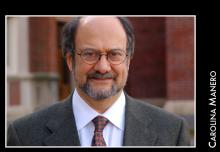
Robert Kuttner
Robert Kuttner is cofounder and coeditor of The American Prospect magazine, as well as a Distinguished Senior Fellow of the think tank Demos. He was a longtime columnist for BusinessWeek, and continues to write columns in the Boston Globe.
His previous and widely praised books include The Squandering of America: How the Failure of Our Politics Undermines Our Prosperity; Everything for Sale: The Virtues and Limits of Markets (about which Robert Heilbroner wrote, "I have never seen the market system better described, more intelligently appreciated, or more trenchantly criticized than in Everything for Sale"); The End of Laissez-Faire: National Purposefrom: http://www.chelseagreen.com
Satyam banned from offshoring work with World Bank: Report
NEW YORK: Software major Satyam Computer Services has reportedly been banned from doing any off-shore work with the World Bank after forensic experts and bank investigators discovered that spy software was covertly installed on workstations inside the bank's Washington headquarters, allegedly by one or more contractors from Satyam Computer Services.
According to a FOX News report, apart from Satyam, two IP intrusions have been reported from China, and there have been six intrusions in all.
Investigators say that the software, which operates through a method known as keystroke logging, enabled every character typed on a keyboard to be transmitted to a still-unknown location via the Internet.
Upon its discovery, bank officials shut off the data link between Washington and Chennai, where Satyam has long operated the bank's sole offshore computer center responsible for all of the bank's financial and human resources information.
"I want them off the premises now," World Bank President Robert Zoellick reportedly told his deputies. But at the urging of CIO De Poerck, Satyam employees remained at the bank as recently as October 1 while it engaged in "knowledge transfer" with two new India-based contractors.
from: http://economictimes.indiatimes.com
According to a FOX News report, apart from Satyam, two IP intrusions have been reported from China, and there have been six intrusions in all.
Investigators say that the software, which operates through a method known as keystroke logging, enabled every character typed on a keyboard to be transmitted to a still-unknown location via the Internet.
Upon its discovery, bank officials shut off the data link between Washington and Chennai, where Satyam has long operated the bank's sole offshore computer center responsible for all of the bank's financial and human resources information.
"I want them off the premises now," World Bank President Robert Zoellick reportedly told his deputies. But at the urging of CIO De Poerck, Satyam employees remained at the bank as recently as October 1 while it engaged in "knowledge transfer" with two new India-based contractors.
from: http://economictimes.indiatimes.com
Financial crisis hits poor nations as well
WASHINGTON: As the world's richest nations debate how to bring a catastrophic financial crisis under control, international groups are warning that its reach now goes far beyond the developed world.
Poor countries in Africa, Asia and Latin America, which are already dealing with a surge in food and energy prices, are now finding it harder to sell goods abroad and encourage investment in their own economies.
Rich nations are falling well behind on their aid pledges as they face problems at home. As many as 30 countries are dealing with severe balance of payment problems, in other words, a shortfall of cash, according to the World Bank.
That lack of investment could lead to a rash of bank and business failures in poor nations, similar to the chaos that has played out since September in the United States and Europe.
As a result, the World Bank has "tentatively" cut its forecast for 2009 growth in developing countries to about 4 percent, down from an April prediction of 6.6 percent, World Bank President Robert Zoellick told reporters Thursday.
While that compares favourably with the likely recession many advanced economies will face next year, Zoellick said the slowdown in poorer nations was "so sharp as to feel like a recession".
The International Monetary Fund said it was ready to make emergency loans to developing countries to meet the cash shortfall from the broadening financial crisis.
from: http://economictimes.indiatimes.com
Poor countries in Africa, Asia and Latin America, which are already dealing with a surge in food and energy prices, are now finding it harder to sell goods abroad and encourage investment in their own economies.
Rich nations are falling well behind on their aid pledges as they face problems at home. As many as 30 countries are dealing with severe balance of payment problems, in other words, a shortfall of cash, according to the World Bank.
That lack of investment could lead to a rash of bank and business failures in poor nations, similar to the chaos that has played out since September in the United States and Europe.
As a result, the World Bank has "tentatively" cut its forecast for 2009 growth in developing countries to about 4 percent, down from an April prediction of 6.6 percent, World Bank President Robert Zoellick told reporters Thursday.
While that compares favourably with the likely recession many advanced economies will face next year, Zoellick said the slowdown in poorer nations was "so sharp as to feel like a recession".
The International Monetary Fund said it was ready to make emergency loans to developing countries to meet the cash shortfall from the broadening financial crisis.
from: http://economictimes.indiatimes.com
Subscribe to:
Posts (Atom)
